Warm air from the vents is the symptom that brings in the widest range of possible causes we see — anywhere from a thermostat set wrong to a failed compressor. The good news is you can narrow it down quite a bit yourself before ever picking up the phone.
Check these three things first — they take under five minutes
1. The thermostat mode and settings
Confirm it is set to "Cool," not "Fan" or "Auto" fan with heat mode selected. A thermostat bumped into fan-only mode will circulate air constantly without cooling any of it — the single most common false alarm we get called for. Also confirm the setpoint is actually below the current room temperature.
2. The air filter
A severely clogged filter can restrict airflow enough that the air reaching the vents feels lukewarm even though the system is technically cooling. This is also a precursor to a frozen coil (see below), so a dirty filter is worth ruling out early.
3. The outdoor condenser unit
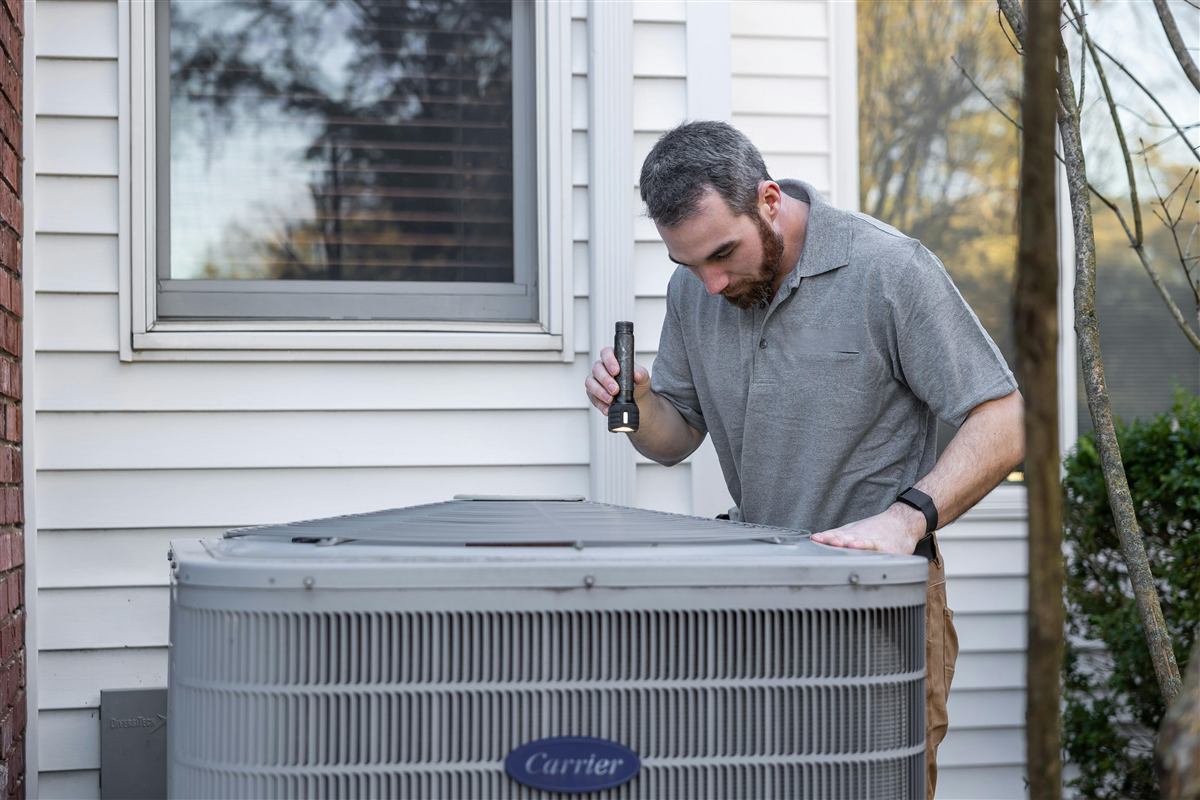
Walk outside and look at the condenser. Is the fan spinning? Do you hear the compressor running (a steady hum, not clicking or silence)? If the outdoor unit is not running at all while the indoor blower is, that points to an electrical issue — a tripped breaker, a bad capacitor, or a failed contactor — rather than a refrigerant problem.
If those check out, here is what is likely going on
Low refrigerant from a leak
Refrigerant does not get "used up" in normal operation. If your system is low, something is leaking — commonly at the evaporator coil, a line-set fitting, or a Schrader valve. A system low on charge keeps running but loses its ability to remove heat efficiently, so the air leaving the vents gradually warms up over hours or days rather than failing all at once.
A frozen evaporator coil
Once a coil ices over, airflow across it drops sharply, and whatever air does get through has not been properly cooled. A system that was blowing cool air yesterday and warm air today, especially after a long run in extreme heat, may have iced up. We cover the mechanics of why that happens in our guide to frozen AC coils — the short version is: turn it off and let it thaw before running it again.
A failing or failed compressor
The compressor is what actually pressurizes refrigerant so it can absorb and release heat. If it is not engaging, spinning intermittently, or has failed outright, the outdoor unit may still run its fan while doing none of the actual cooling work. This is the most expensive cause on this list and the one most worth catching with a proper diagnostic rather than guessing.
Duct problems
Disconnected, crushed, or badly leaking ducts — especially runs through a hot attic — can let already-cooled air mix with attic-temperature air before it reaches the room. This shows up as warm air at some vents and normal air at others, rather than warm air everywhere.
An undersized or overloaded system on the hottest days
On Houston's peak-heat afternoons, a system that is already borderline on capacity (due to age, a partially blocked coil, or a home addition it was never sized for) can fall behind and never quite reach setpoint. The air is cooler than room temperature but not as cold as it should feel.
What we check during a diagnostic visit
- Thermostat call signal reaching the outdoor unit
- Compressor amperage draw and start components (capacitor, contactor)
- Refrigerant pressures and superheat/subcooling against manufacturer spec
- Coil condition, front and back, for ice or heavy dirt
- Supply-to-return temperature split at the air handler
- Visible duct condition in accessible runs
We diagnose first and give you a flat-rate quote before anything gets repaired — no guessing, no parts-cannon approach. If you have already checked the thermostat, filter, and outdoor unit and it is still blowing warm, call (346) 477-1528 and we will get a same-day diagnostic scheduled when you call before 2 PM.